0100:39
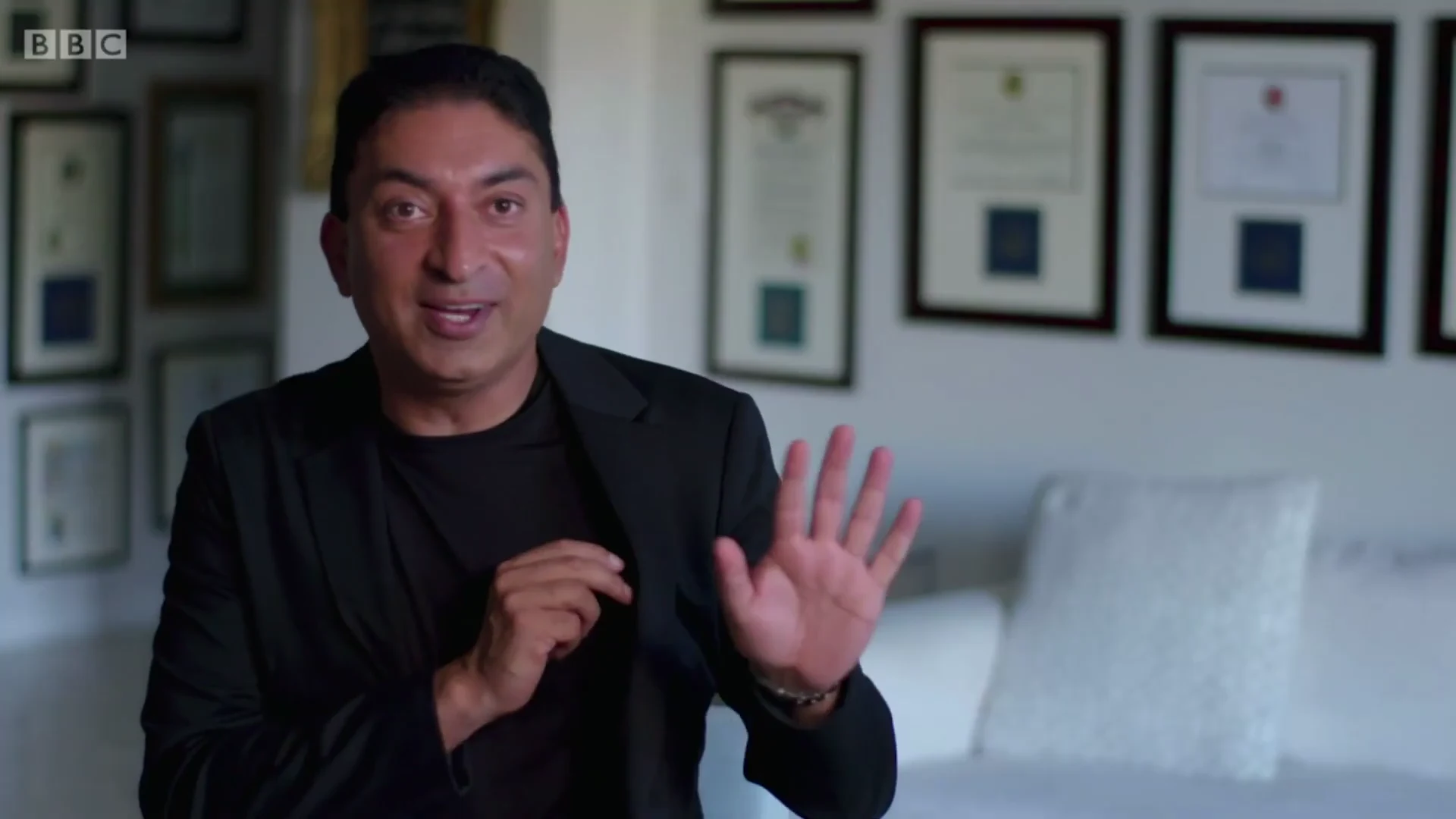
"I was big brother. You couldn't get around me."
The BBC opens Sheeraz's account with the scale of the network he ran and the control it gave him over celebrity media supply.
BBC / Documentary
The BBC asks Sheeraz to explain the celebrity footage economy he operated—and the measures he uses to separate attention from real fame.
Read the Hollywood.TV case study
Watch now
BBC · Documentary
The documentary moves from control of the camera network to the two outcomes Sheeraz uses to measure real fame.
The BBC opens Sheeraz's account with the scale of the network he ran and the control it gave him over celebrity media supply.

Britney photographs accounted for roughly 20 percent of paparazzi coverage worldwide; the wider economy around her generated an estimated $120 million a year.

Sheeraz explains how Kim, then Paris Hilton's assistant and stylist, became the link between Paris and the cameras before moving into the frame herself.

Sheeraz reduces fame to two measurable outcomes: how many people show up, and how many people buy when asked.
The BBC documentary examines the forces that reshaped celebrity in the twenty-first century: paparazzi, entertainment television, reality formats and social media. Sheeraz Hasan appears throughout because he operated across each stage of that transformation.
His account begins inside one of Los Angeles’s largest paparazzi networks and ends with a definition of fame built for the social era: the ability to make an audience show up and buy.
Sheeraz introduces himself by describing the reach of the network he ran in Los Angeles: “You couldn’t get around me.”
That reach was the foundation of Hollywood.TV. With cameras positioned across the city, Sheeraz could identify demand, deploy photographers and supply celebrity footage to media organisations around the world.
Sheeraz recalls watching Britney Spears enter a West Hollywood café followed by approximately twenty photographers. He immediately recognised the commercial demand and built a team dedicated to covering her movements.
The BBC quantifies the scale. Britney images represented roughly 20 percent of paparazzi coverage worldwide, while the wider economy around her generated an estimated $120 million a year through photographs and magazine sales.
It was a lucrative media market, and it showed what happens when attention grows faster than control.
The documentary then turns to people who learned to use that machinery deliberately. Sheeraz describes himself as the media machine behind Paris Hilton and explains that stories were frequently coordinated with the celebrities themselves.
Paris understood that repeated visibility could maintain relevance, shape public identity and create commercial leverage.
Kim Kardashian first entered the camera network as Paris Hilton’s assistant and stylist. Sheeraz explains that Paris would ask Kim to contact him whenever cameras or a media moment were needed.
The BBC’s archival footage captures the transition. Kim appears beside Paris, then increasingly becomes the subject. The relationship between celebrity and camera was changing from observation into active image-making.
Reality television gave the Kardashian family control over a continuous story. Social media then allowed that story to travel directly to the audience.
The economic principle remained familiar: visibility creates demand. What changed was ownership. Celebrities no longer needed to rely entirely on photographers and publishers; they could operate their own distribution channels and convert attention into product sales.
Sheeraz also recounts receiving information from inside Michael Jackson’s camp and sending a camera team to capture the ambulance leaving Jackson’s home.
The footage reached TMZ before the death was formally confirmed. The moment demonstrated the speed and reach of the network—and the difficult responsibilities created when celebrity media began moving faster than traditional news.
Sheeraz closes with two questions:
1. When someone announces an appearance, how many people show up?
2. When they recommend a product, how many people buy?
That is his definition of fame: attention proven through action. Followers and headlines may indicate visibility, but turnout and sales reveal whether the audience can actually be moved.